In this article6
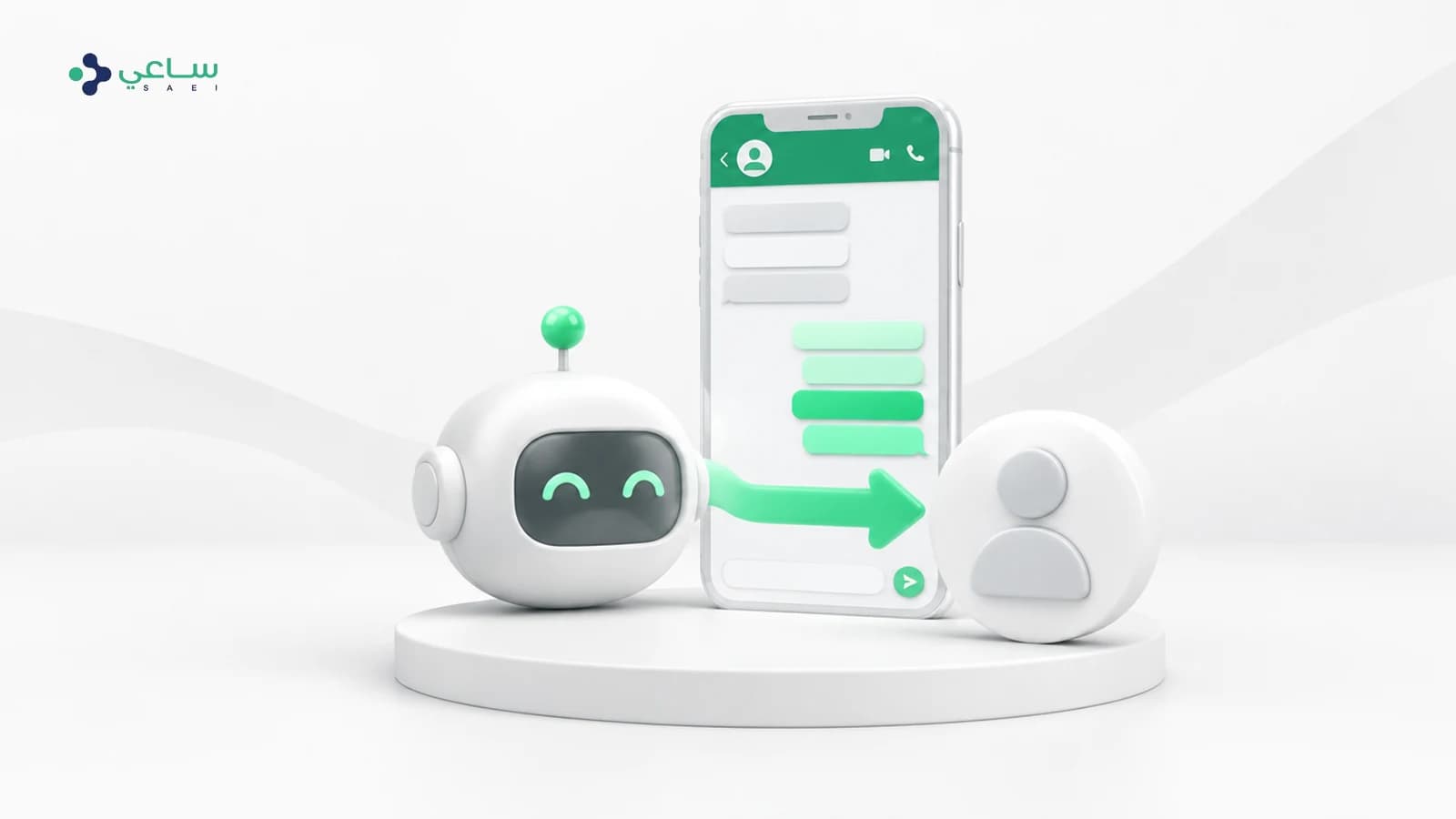
This guide covers what triggers a handover, what the agent sees when they take it, and how the conversation returns to the bot without the customer feeling a break.
What triggers a handover
Four triggers, and all of them should be set before publishing rather than after:
- An explicit request from the customer — "I want to speak to someone" and anything like it.
- A question the bot finds no answer to in your sources — the most important trigger of the four.
- A topic you always route to people: a complaint, a return, a medical question.
- Repetition without progress — the customer rephrasing while the conversation circles.
What travels with the conversation
A handover is not passing a phone number across. What reaches the agent is the whole conversation: what the customer asked, what the bot answered, and what it collected inside the flow — the name, the order, any field you defined.
Which is why your agent’s first sentence is a continuation rather than an opening. What the customer feels is simply not being asked about something they said a minute ago.
The order that makes it work
- 1.Train the bot on your sources firstYour files, documents and links. What is not in its sources it will not know, and that is deliberate rather than a gap.
- 2.Define the topics it never takesWrite them explicitly instead of relying on its judgement: complaints, returns, sensitive cases.
- 3.Test in the simulator before publishingTry a scenario it deliberately does not know, and confirm it hands over rather than guesses.
- 4.Hand over into the inbox, not into an emailA conversation leaving the platform loses its context and comes back with no record.
- 5.Decide when it returns to the botAfter the agent closes, or on a new topic — never in the middle of a live human exchange.
What spoils a handover
Three repeated mistakes, all of them in the setup rather than the technology:
- A bot with no explicit handover trigger — it guesses because it was given no exit.
- Handing over to a channel outside the platform — the context is lost at the boundary.
- Returning to the bot in the middle of a live human exchange — the worst thing a customer can feel.
And who picks it up?
A handed-over conversation needs an owner rather than a queue. Assignment, the response target and what follows from them are in the team roles and response times guide.
Frequently asked questions
Does the customer know they moved to a human?
Clearer is better: a short line saying a colleague will continue prevents confusion and reduces repetition. Hiding it is always noticed and costs trust.
What if nobody is available?
The conversation waits in the inbox for whoever takes it, and the bot can say so plainly rather than going silent — silence is what reads as being ignored.
Can the agent hand it back to the bot?
Yes, and the right moment is after closing what they took, or on a new topic — not in the middle of a live exchange.
Does the agent see what the bot said?
Yes, the whole conversation including the bot’s answers and what it collected. That is the difference between a handover and a transferred phone call.
How do I stop it answering sensitive questions?
Define the topic explicitly among those always handed over. Relying on its judgement for sensitive topics is not a control.
Does a handover consume my messaging limit?
No. The conversation is open and the customer started it, so replies inside the follow-up window do not consume the daily limit.